What is TDS?
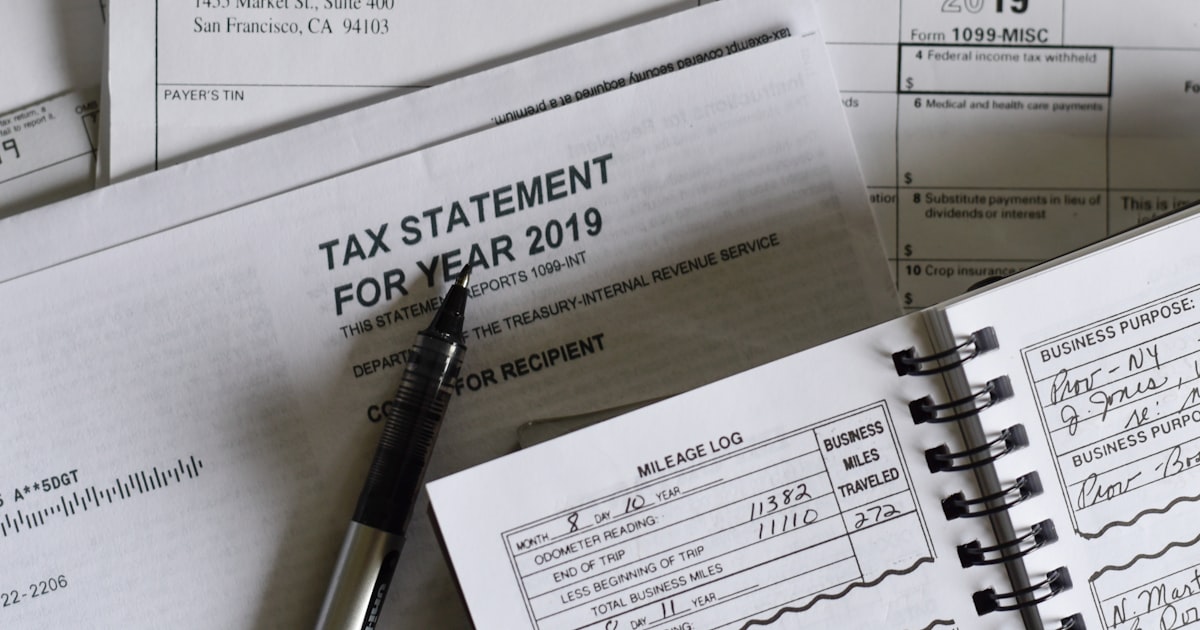
TDS stands for Tax Deducted at Source. It is a mechanism of collecting income tax at the point of income generation. Instead of the recipient paying the entire tax at the end of the year, the person making the payment (deductor) deducts a percentage of tax at the time of payment and deposits it with the government on behalf of the recipient (deductee). For example, if a company pays Rs. 1,00,000 to a consultant and the TDS rate is 10%, the company deducts Rs. 10,000 and pays Rs. 90,000 to the consultant. The Rs. 10,000 is deposited with the government. The consultant can claim credit for this TDS when filing their income tax return.
Who is required to deduct TDS?
TDS must be deducted by:
1) Companies: Every
Private Limited Company,
Public Limited Company, and other body corporates.
2) Firms: Partnership firms and
LLPs.
3) Individuals/HUFs (if audited): Individuals and HUFs whose accounts were subject to
tax audit in the previous year (turnover exceeding Rs. 1 crore for business or Rs. 50 lakh for profession).
4) Government Bodies: Central and state government departments.
5) Trusts and Associations: If making specified payments.
Note: Small businesses below the audit threshold are generally exempt from TDS obligations on most payments (except TDS on salary and rent above Rs. 50,000/month by individuals under Section 194-IB).
What is TAN and how to obtain it?
TAN is the Tax Deduction and Collection Account Number, a 10-digit alphanumeric number required by every person responsible for deducting TDS. To Obtain TAN: 1) Apply through Form 49B on the NSDL/UTIITSL website or through the income tax portal. 2) Provide business name, PAN, address, and type of deductor. 3) Pay the application fee (Rs. 65 + GST). 4) TAN is allotted within 7-15 working days. 5) TAN must be quoted in all TDS returns, TDS certificates, and challans. Important: TAN is different from PAN. Every deductor must have TAN. A company can obtain TAN simultaneously during incorporation through SPICe+.
What are the common TDS sections for small businesses?
The most relevant sections for small businesses: 1) Section 192: TDS on Salary. 2) Section 194A: TDS on Interest (other than securities). 3) Section 194C: TDS on Contractor/Sub-contractor payments. 4) Section 194H: TDS on Commission/Brokerage. 5) Section 194I: TDS on Rent. 6) Section 194J: TDS on Professional/Technical Fees. 7) Section 194Q: TDS on Purchase of Goods (above Rs. 50 lakh). 8) Section 194-IA: TDS on Property Purchase. 9) Section 194-IB: TDS on Rent by Individual/HUF (above Rs. 50,000/month). 10) Section 195: TDS on Payments to Non-Residents.
What are the TDS rates for common payments?
Key TDS rates for FY 2025-26: 1) Salary (Sec 192): Average rate of income tax on estimated salary. 2) Interest (Sec 194A): 10%. 3) Contractor (Sec 194C): 1% (individual/HUF), 2% (others). 4) Commission (Sec 194H): 5%. 5) Rent - Land/Building (Sec 194I): 10%. 6) Rent - Plant/Machinery (Sec 194I): 2%. 7) Professional Fees (Sec 194J): 10%. 8) Technical Fees (Sec 194J): 2%. 9) Purchase of Goods (Sec 194Q): 0.1%. 10) Property Purchase (Sec 194-IA): 1%. Note: Rates are doubled if the deductee does not provide PAN (Section 206AA). Even higher rates may apply under Section 206AB for non-filers.
When must TDS be deducted?
TDS must be deducted at the earlier of the following two events: 1) At the time of credit: When the amount is credited to the payee's account in the books of the deductor (even if not actually paid). 2) At the time of payment: When the amount is actually paid by cash, cheque, draft, or any other mode. Exception for Salary (Sec 192): TDS is deducted only at the time of actual payment, not at credit. Practical Impact: If you accrue expenses in your books (e.g., professional fees payable), TDS must be deducted at the time of the accounting entry, even if the payment is made later.
What is the due date for TDS payment?
TDS deposit due dates: 1) Government Deductors: Same day as deduction (for payments through book entry). 2) Non-Government Deductors: By the 7th of the following month. For example, TDS deducted in January must be deposited by February 7. 3) March Exception: TDS deducted in March must be deposited by April 30. 4) Challan: Payment is made through Challan No. 281 on the income tax portal (e-payment). 5) Important: If the 7th falls on a Sunday or public holiday, the next working day is the due date. Late payment attracts interest at 1.5% per month from the date of deduction to the date of deposit.
What are the TDS return forms and due dates?
TDS return forms: 1) Form 24Q: Quarterly return for TDS on salary (Section 192). 2) Form 26Q: Quarterly return for TDS on non-salary payments to residents (Sections 194A, 194C, 194H, 194I, 194J, etc.). 3) Form 27Q: Quarterly return for TDS on payments to non-residents (Section 195). 4) Form 27EQ: Quarterly return for Tax Collected at Source (TCS). Due Dates: Q1 (Apr-Jun): July 31. Q2 (Jul-Sep): October 31. Q3 (Oct-Dec): January 31. Q4 (Jan-Mar): May 31. Filing: Returns are filed electronically through the income tax e-filing portal or through authorized e-return intermediaries.
How is TDS on salary calculated?
TDS on salary calculation (Section 192): 1) Estimate annual salary: Gross salary including basic, DA, HRA, special allowance, bonuses, and all other taxable components. 2) Allow exemptions: HRA exemption (Section 10(13A)), LTA, standard deduction (Rs. 75,000 for new regime). 3) Deduct Chapter VI-A: Under old regime: Section 80C (EPF, PPF, ELSS), 80D (health insurance), 80E (education loan), etc. Under new regime: limited deductions (NPS under 80CCD(2)). 4) Calculate tax: Apply the applicable income tax slab rates (old or new regime as opted by employee). 5) Divide by 12: Monthly TDS = Annual tax / 12 months (adjusted for actuals as year progresses). 6) Employer obtains Form 12BB: Declaration of investments from employee for TDS calculation.
What is TDS on rent (Section 194I)?
Section 194I TDS on rent: 1) Applicable When: Rent paid exceeds Rs. 2,40,000 per year to a single payee. 2) Rate - Land/Building/Furniture: 10%. 3) Rate - Plant/Machinery/Equipment: 2%. 4) Deductor: Any person (other than individual/HUF not liable for audit) paying rent. 5) Time: Deduct at credit or payment, whichever is earlier. 6) For Individuals/HUF Not Liable for Audit: Section 194-IB applies when monthly rent exceeds Rs. 50,000. TDS rate under 194-IB is 5%, and the deduction is made from the last month's rent payment (or when the tenancy ends). 7) Threshold: No TDS if total annual rent to a single payee is Rs. 2,40,000 or less under 194I.
What is TDS on professional fees (Section 194J)?
Section 194J TDS: 1) Applicable To: Payment for professional services (CA, lawyer, doctor, architect, consultant, etc.) and technical services (IT services, engineering, testing). 2) Rate: 10% for professional fees and 2% for technical services (including fees for call center services). 3) Threshold: Rs. 30,000 per year per payee. No TDS if the total payment to a payee in a financial year is Rs. 30,000 or less. 4) Deductor: Any person (other than individual/HUF not liable for audit). 5) Royalty and Non-Compete: Also covered under 194J at 10%. 6) Director's Fees: Sitting fees or commission paid to company directors is covered under 194J at 10% (no threshold limit for directors).
What is TDS on contractor payments (Section 194C)?
Section 194C TDS: 1) Applicable To: Payment to any contractor or sub-contractor for carrying out any work (including supply of labour, advertising, catering, transport, etc.). 2) Rate: 1% if the payee is an individual or HUF. 2% if the payee is a company, firm, cooperative, or any other entity. 3) Threshold: No TDS if single payment is Rs. 30,000 or less AND total payments to the same contractor in the year are Rs. 1,00,000 or less. 4) Transport Operators: If the transporter provides PAN and declares zero/below threshold turnover, no TDS. Otherwise, applicable. 5) Definition of Work: Includes manufacturing, supply of products (with material), construction, and any contract for carrying out work.
What is TDS on purchase of goods (Section 194Q)?
Section 194Q (relatively new, effective from July 2021): 1) Applicable When: Any buyer whose total sales/turnover exceeds Rs. 10 crore in the preceding financial year makes purchases of goods from a single seller exceeding Rs. 50 lakh during the financial year. 2) Rate: 0.1% of the amount exceeding Rs. 50 lakh. 3) Non-PAN Quoted Seller: Rate is 5% if the seller does not provide PAN. 4) Interplay with TCS: If the seller is required to collect TCS under Section 206C(1H) on the same transaction, TDS under 194Q takes precedence (buyer deducts, and seller need not collect TCS). 5) Small businesses with turnover below Rs. 10 crore are not required to deduct TDS under this section.
What is PAN-based higher TDS rate (Section 206AA)?
Section 206AA requires higher TDS if the deductee does not provide PAN: 1) Rate: TDS is deducted at the higher of: (a) Prescribed TDS rate, (b) 20%, (c) Rate in force. 2) Practical Impact: If a consultant does not provide PAN, TDS on their fees is 20% instead of 10%. 3) Exception: For salary TDS (Section 192), the rate without PAN follows the applicable slab rates (not the 20% rule). 4) Section 206AB (Non-Filer): If the deductee has not filed income tax returns for both of the two preceding years AND the aggregate TDS/TCS in each year is Rs. 50,000 or more, TDS rate is double the prescribed rate or 5%, whichever is higher. 5) Always collect PAN from all payees to avoid higher TDS deduction and recipient disputes.
What are the penalties for TDS non-compliance?
Penalties and consequences: 1) Late Deduction: Interest at 1% per month from the date TDS was deductible to the date of deduction. 2) Late Deposit: Interest at 1.5% per month from the date of deduction to the date of deposit. 3) Non-Deduction: The deductor cannot claim the expense as a deduction under income tax (Section 40(a)(ia)). The deductible amount is disallowed until TDS is deducted and deposited. 4) Late Filing of TDS Return: Fee of Rs. 200 per day (Section 234E) until the return is filed, maximum up to the total TDS amount. 5) Incorrect TDS Return: Penalty of Rs. 10,000 to Rs. 1,00,000 (Section 271H). 6) Non-Issuance of TDS Certificate: Penalty of Rs. 100 per day per certificate.
What is a TDS certificate and when to issue it?
TDS certificates are proof of TDS deduction: 1) Form 16: Annual TDS certificate for salary (Section 192). Must be issued by June 15 of the assessment year. It has Part A (auto-generated from TRACES portal, contains TDS details) and Part B (contains income breakup, deductions). 2) Form 16A: Quarterly TDS certificate for non-salary payments (all other sections). Must be issued within 15 days of the due date for filing the quarterly TDS return. For example: Q1 certificate by August 15, Q2 by November 15, Q3 by February 15, Q4 by June 15. 3) Form 16B: TDS certificate for property purchase (Section 194-IA). 4) Form 16C: TDS certificate for rent by individual/HUF (Section 194-IB).
What is Lower Deduction Certificate (Section 197)?
Section 197 allows a deductee to apply for nil or lower TDS deduction: 1) When: If the deductee's total income is lower than the TDS being deducted (e.g., a startup with no profits having 10% TDS deducted on all receipts, creating large refund claims). 2) How: File Form 13 via the income tax e-filing portal. 3) Documents: Estimated income for the year, tax computation, details of advance tax/TDS credits, and previous year's return. 4) Certificate: The Assessing Officer issues a certificate specifying the reduced TDS rate (can be nil). 5) Duration: Valid for one financial year. 6) Benefit: Improves cash flow for the deductee since less money is locked up in TDS refunds. 7) Deductor's Duty: Once the deductee provides a valid Section 197 certificate, the deductor must apply the lower rate.
How does TDS work for freelancers and consultants?
TDS treatment for freelancers: 1) Section 194J: If a business pays a freelancer/consultant more than Rs. 30,000 in a financial year, TDS at 10% must be deducted. 2) Section 194C: If the engagement is on a 'work contract' basis (not professional services), TDS is 1% (individual) or 2% (firm/company). 3) Freelancer's Obligation: Claim TDS credit in ITR. If refund is due, file ITR to claim it. 4) Form 16A: The deductor must issue Form 16A to the freelancer. 5) Advance Tax: Freelancers with total tax liability above Rs. 10,000 must also pay advance tax quarterly. 6) Lower Deduction: Freelancers with low income can apply for a Section 197 certificate for nil/lower TDS.
What is the process for TDS return filing?
Step-by-step TDS return filing: 1) Install software: Download the RPU (Return Preparation Utility) from NSDL/Protean or use third-party TDS software. 2) Prepare the return: Enter deductor details (TAN, PAN, address), deductee details (PAN, amount paid, TDS deducted, section, date), and challan details (BSR code, date, serial number). 3) Validate: Run the FVU (File Validation Utility) to check for errors. 4) Generate FVU file: Produces a .fvu file for upload. 5) Upload: Upload the .fvu file on the income tax e-filing portal (e-TDS/TCS section) with DSC or EVC. 6) Acknowledgment: Download the provisional receipt. 7) Generate certificates: After filing, generate Form 16/16A from TRACES portal.
What is TRACES and how is it used?
TRACES stands for TDS Reconciliation Analysis and Correction Enabling System (tdscpc.gov.in): 1) Purpose: Central portal for all TDS-related processing and information. 2) Functions: Download TDS certificates (Form 16, 16A, 16B, 16C), file correction returns, view TDS statement status, verify TDS challans, request for consolidated statement, generate Form 26AS data. 3) Login: Deductors log in using TAN; deductees log in using PAN. 4) Correction Returns: If errors are found in the original TDS return, correction statements (C1 for personal details, C2 for deductee details, C3 for challan details) can be filed through TRACES. 5) Bulk PAN Verification: Verify PAN of multiple deductees simultaneously. 6) 26AS: TRACES generates the consolidated tax statement (Form 26AS) that shows all TDS credits for a PAN.
What is the TDS obligation when paying rent for office?
TDS on rent for businesses: 1) Section 194I (Business Deductors): If you are a company, firm, or individual/HUF liable for audit, deduct TDS at 10% on rent exceeding Rs. 2,40,000/year to a single landlord. 2) Rate: 10% for land/building/furniture; 2% for plant/machinery. 3) Section 194-IB (Non-Audit Individuals/HUF): If you are an individual or HUF not liable for audit but pay monthly rent exceeding Rs. 50,000, deduct TDS at 5%. This is filed using Form 26QC (within 30 days of the last month of FY or tenancy, whichever is earlier). 4) GST Treatment: TDS is deducted on the rent amount excluding GST (as clarified by CBDT). 5) Co-Working Spaces: If the payment is for 'services' rather than 'rent', Section 194J (2%) may apply instead.
Do startups need to comply with TDS?
Yes,
every startup registered as a Private Limited Company or LLP must comply with TDS from day one:
1) A
Private Limited Company is required to deduct TDS on all applicable payments (salary, rent, professional fees, contractor payments) regardless of turnover.
2) An
LLP has the same obligation.
3) Startup India registration does not exempt from TDS compliance.
4) Even if the startup has zero revenue, TDS must be deducted on outgoing payments.
5) Startups often struggle with TDS because they are unaware of their obligations from inception.
6) Key Advice: Get TAN during incorporation (through SPICe+), set up
accounting systems from day one, and file TDS returns quarterly without fail.
What is TDS on interest payments (Section 194A)?
Section 194A TDS on interest: 1) Covers: Interest on loans, fixed deposits, recurring deposits, and any other interest income (excluding interest on securities under Section 193). 2) Rate: 10%. 3) Threshold: No TDS if interest paid to a single person is: Rs. 40,000/year (for banks/post offices) or Rs. 5,000/year (for others). 4) For Businesses: If your company borrows from individuals and pays interest, TDS at 10% must be deducted when interest exceeds Rs. 5,000/year. 5) NBFCs/Nidhi Companies: Must deduct TDS on interest paid on deposits if interest exceeds Rs. 5,000/year per member. 6) Form 15G/15H: If the recipient furnishes Form 15G (below 60) or 15H (senior citizen) declaring that tax is not payable on total income, TDS need not be deducted.
How to correct errors in TDS returns?
Error correction process: 1) Identify the Error: Check the statement status on TRACES for defaults. Common errors: wrong PAN, wrong section code, wrong TDS amount, wrong challan details. 2) File Correction Statement: Download the consolidated statement from TRACES. 3) Correction Types: C1 (deductor details), C2 (deductee/challan details), C3 (add new deductee), C4 (add new challan/transfer), C5 (PAN correction). 4) Prepare in RPU: Make corrections in the downloaded file using the Return Preparation Utility. 5) Validate with FVU: Run the File Validation Utility. 6) Upload: File the correction statement on the e-filing portal. 7) Timeline: Corrections can usually be filed within 6 years from the end of the financial year.
What is the impact of TDS on cash flow?
TDS significantly affects cash flow: For the Deductor (Payer): 1) The full payment amount goes out, but TDS is diverted to the government. Net cash outflow is the same. 2) However, the deductor must manage TDS deposits and filing costs. For the Deductee (Recipient): 1) Receives only the net amount (gross minus TDS). For a consultant earning Rs. 10 lakh, Rs. 1 lakh is deducted as TDS, leaving Rs. 9 lakh cash in hand. 2) If total tax liability is less than TDS deducted, the excess is refunded only after ITR filing (can take 2-6 months). 3) This creates a cash flow gap, especially for startups and small businesses with low margins. Solution: Apply for a Section 197 lower deduction certificate to reduce TDS and improve cash flow.
What is TDS on commission or brokerage (Section 194H)?
Section 194H: 1) Covers: Commission or brokerage paid for services rendered (excluding insurance commission which falls under Section 194D). Includes: sales commission, advertising commission, real estate brokerage, distribution commission. 2) Rate: 5%. 3) Threshold: Rs. 15,000 per year per payee. No TDS if commission to a single payee is Rs. 15,000 or less in the financial year. 4) Not covered: Commission already included in the sale price (principal-to-principal transactions). 5) Telecom/FMCG Distributors: If the relationship is buyer-seller (principal-to-principal), 194H does not apply. If it is agency/commission, 194H applies. The distinction depends on the agreement terms.
How often should a small business review TDS compliance?
Recommended review schedule:
1) Monthly: Verify all TDS deductions made during the month, match with payment vouchers, and ensure timely deposit by the 7th.
2) Quarterly: Before the TDS return due date, reconcile all deductions with challans, validate PAN of deductees, and file the return.
3) Annually: Full annual reconciliation: match TDS certificates issued with returns filed, verify Form 26AS/AIS for all deductees, ensure no defaults on TRACES.
4) During Tax Audit: Auditors will verify TDS compliance. Any default leads to
expense disallowance under Section 40(a)(ia).
5) Use Software: Invest in TDS software or use
professional bookkeeping services to automate calculations and avoid manual errors.
What is TDS on payments to non-residents (Section 195)?
Section 195 TDS on non-resident payments: 1) Covers: Any sum chargeable to tax in India paid to a non-resident or foreign company. This includes: consultancy fees, software license fees, royalties, interest, advertising payments, subscription services. 2) Rate: Depends on the nature of income and applicable DTAA (Double Taxation Avoidance Agreement). Typical rates: Interest: 20%, Royalty: 10%, Fees for technical services: 10%, Other income: 30%. 3) DTAA Benefit: If India has a DTAA with the recipient's country, the lower treaty rate applies (subject to the recipient providing a Tax Residency Certificate). 4) Form 15CA/15CB: Required for authorizing foreign remittance. Form 15CB is a CA certificate, and 15CA is the online declaration filed on the income tax portal.
What happens if TDS is not deducted?
Failure to deduct TDS has serious consequences: 1) Expense Disallowance: Under Section 40(a)(ia), 30% of the payment amount is disallowed as a business expense if TDS is not deducted. This increases taxable income. 2) Interest: Interest at 1% per month from the date TDS should have been deducted to the date of actual deduction. 3) Penalty: Penalty under Section 271C equal to the amount of TDS that was not deducted. 4) Prosecution: Rigorous imprisonment of 3 months to 7 years with fine under Section 276B for failure to deposit TDS after deduction. 5) Deemed Assessee in Default: The deductor is treated as an 'assessee in default' and the entire tax amount can be recovered from them, plus interest and penalty.
What are the key TDS dates a small business must remember?
Critical TDS dates for FY 2025-26:
Monthly Deposit: 7th of every month (30th April for March deductions).
Q1 Return (Apr-Jun): July 31.
Q2 Return (Jul-Sep): October 31.
Q3 Return (Oct-Dec): January 31.
Q4 Return (Jan-Mar): May 31.
Form 16 (Salary): June 15.
Form 16A (Non-Salary): Within 15 days of quarterly return due date (Aug 15, Nov 15, Feb 15, Jun 15).
Form 26QC (Rent by Individual): Within 30 days of end of month in which TDS is deducted.
Form 15G/15H Collection: By March 31 of the financial year. Keep a
compliance calendar to track all dates.
What are Form 15G and Form 15H?
Forms 15G and 15H are self-declaration forms to avoid TDS on interest income: 1) Form 15G: For individuals below 60 years and HUFs whose estimated total income is below the basic exemption limit (Rs. 2.5 lakh under old regime, Rs. 3 lakh under new regime). 2) Form 15H: For senior citizens (60 years and above) whose estimated tax on total income is nil. 3) How It Works: The recipient submits the form to the payer/bank, declaring that their total income will not be taxable. The payer then does not deduct TDS. 4) Payer's Obligation: The payer must file Form 15G/15H with the income tax department by uploading on the e-filing portal within Q1 filing due date (usually July 15). 5) Validity: One financial year. Must be renewed every year.
Can TDS be claimed as refund?
Yes, excess TDS deducted is refunded through income tax return filing: 1) When filing ITR, the deductee includes all income, claims deductions, and calculates actual tax liability. 2) TDS credits (visible in Form 26AS/AIS) are adjusted against the total tax liability. 3) If TDS deducted exceeds the actual tax, the excess is refunded by the income tax department. 4) Refund Timeline: Typically 1-4 months after ITR processing (e-verification speeds this up). 5) Interest on Refund: Interest at 6% per annum (simple) is paid on the refund from April 1 of the assessment year or date of tax payment, to the date of refund grant. 6) Prevention: Apply for a Section 197 lower/nil deduction certificate to avoid excess TDS in the first place.
How does IncorpX help with TDS compliance?
IncorpX provides
end-to-end TDS compliance services:
1) TAN Registration: We obtain TAN for your business (included in company registration package).
2) TDS Calculation: Monthly TDS computation for all payments (salary, rent, professional fees, contractors).
3) TDS Deposit: Timely challan preparation and payment by the 7th of every month.
4) Quarterly Returns: Filing of 24Q, 26Q, 27Q, and 27EQ on time.
5) TDS Certificates: Generation and distribution of Form 16 and Form 16A from TRACES.
6) Correction Returns: Filing of correction statements for any errors.
7) Lower Deduction: Assistance with Section 197 applications. Integrated with our
accounting and
bookkeeping services for seamless compliance.